

If you’ve ever struggled with sticking to a diet, felt overwhelmed by hunger, or wondered why the weight you lost came back so quickly, you’re not alone—and it’s not your fault.
When you lose weight, your body doesn’t just sit back and applaud your effort. Instead, it fights back. Here’s how
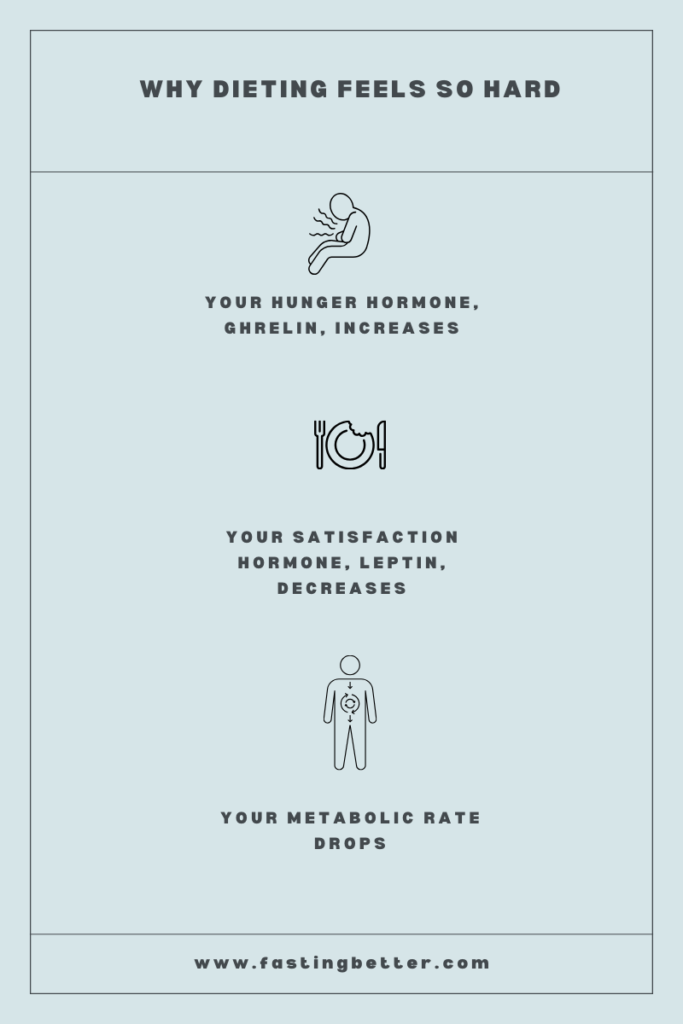
1. Your Hunger Hormone, Ghrelin, Increases
Ghrelin ramps up your desire to eat. It’s that relentless drive that has you reaching for snacks when you weren’t even that hungry. This hormone is not about willpower—your brain isn’t failing you. Your biology is just doing its job.
2. Your Satisfaction Hormone, Leptin, Decreases
With lower leptin levels, you might eat a full meal but still not feel satisfied. Your body is no longer sending the “you’ve had enough” signal, so you keep eating—even when you’re full.
3. Your Metabolic Rate Drops
Your body starts conserving energy. In fact, your daily calorie burn can drop by as much as 25% below what’s expected for your new, smaller body size. That’s why you feel drained and unmotivated, even if you’re eating “right” and exercising.
Why This Happens: Your Body Is Trying to Protect You
This cascade of changes is your body’s way of saying:
“You’re in danger. I need to save your life.”
It doesn’t know you’re dieting for a wedding, summer, or health goals. All it knows is that food is scarce, and it needs to keep you alive. So it pushes hunger up, satisfaction down, and energy conservation to the max.
Over time, this turns into a louder and louder cry from your body: “EAT NOW!”
This isn’t weakness. This is survival. And it’s normal.
So What Can You Do?
Most diets fail because they trigger this biological alarm system. The question is:
How do we eat less without making our bodies freak out and slow our metabolism?
The Surprising Answer: Intermittent Fasting
Unlike traditional low-calorie diets, intermittent fasting appears to trigger positive hormonal and metabolic changes:
- It helps reset appetite signals like ghrelin and leptin.
- It protects your metabolic rate while promoting fat loss.
- It teaches your body to burn fat more efficiently without making it think you’re starving.
This is why fasting may feel easier for many people than constant calorie restriction: your hormones start working with you, not against you.
Final Thought
You’re not broken. You’re not lazy. If you’ve “failed” a diet before, it’s because your body was doing what it’s wired to do—keep you alive.
Instead of fighting your biology, start working with it.